



AMARES AZIELOS
2019 > 2024
Funding
Generalitat of Catalonia
Terrassa City Council
European Solidarity Funds
2024 Photobook publication
Design Bakoom Studio
Publisher Amics de les Arts i JJ.MM. Barcelona, Spain
Awards
2025 Silver Award ADG Laus Aporta
Exhibitions
2026 Photoville, group show, USA
2025 Can Carol, solo show, Spain
2024 La Model, solo show, Spain
2024 Baumann Bar, solo show, Spain
2023 OFF PANORAMIC, solo show, Spain
2023 ALBUM, solo show, Spain
Conferences
2025 Experimental Photo Festival
2025 Barcelona Pensa
Previous project research
“A la deriva! Artistic-pedagogical processes”
https://pa6bd244042.eu.racontr.com
This project took place between September and December 2023 and was aimed at young inmates at the Youth Prison Centre (CPJ) of La Roca del Vallès, along with local and international volunteers. It consisted of a creative laboratory focused on alternative and experimental photography workshops. The project also included an exhibition space within the penitentiary center, featuring an innovative format and visits from both emerging and established artists, including Laia Abril, Irene Zottola, Clara Gassull, Marta G. Cardellach, and Cecília Coca.
Visual Sovereignty and the Politics of Representation
The project was born from a request made by young people themselves during a previous experience in 2019, and responds to a specific social reality: the growing presence of young migrants who, having no ties to the peninsula, receive no visits or external contact on weekends. The project aimed to accompany them in these moments of isolation through the creation of a collective, creative space rooted in care, listening, and the possibility of storytelling. The youth in these spaces are not only deprived of liberty, but also of image. They do not have access to mirrors, cameras, or mobile phones. Their daily experiences — friendships, feelings, personal milestones — remain undocumented, confined to memory. In today’s image-saturated world, where identity and belonging are often affirmed visually, this lack of access to visual self-representation becomes a second, less visible form of deprivation.
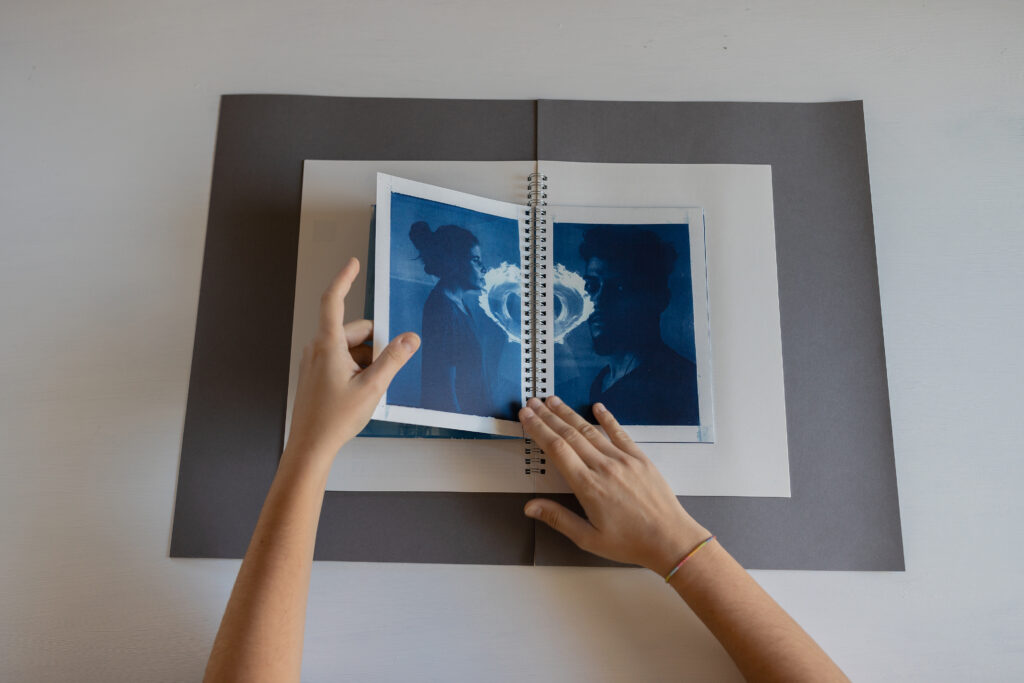
The absence of images also means the absence of recognition — by others and by oneself. Within this context, the project offered workshops in alternative and experimental photography, with a focus on cyanotype printing. Cyanotype is a photographic technique that emerged in the 19th century, first published in the scientific work of Anna Atkins, now widely recognized as the author of the first book illustrated exclusively with photographic images in history: British Algae. Her work — long overshadowed by dominant historical narratives centered on male figures like Niépce or Daguerre — stands as an early feminist gesture in photography, reminding us that science, vision, and memory have also been shaped by women’s hands and eyes. Her legacy affirms not only the presence of women in the origins of photography but also the right to reclaim alternative versions of history. In the context of the youth detention center, this resonates deeply: the young people involved in the project are often seen through a narrow lens defined by stigma or marginality. Through the act of image-making, the project reasserts their right to narrate themselves differently — to exist beyond institutional labels and to imagine futures rooted in care, memory, and creative agency.
The deep blue — produced by ammonium ferric citrate and potassium ferricyanide — is the only vivid color within the prison’s grey walls. This blue of the sky already holds the participants’ prayers, thoughts, and desires. The project’s purpose is to ground those intangible, ever-present hopes and emotions onto paper through their cyanotype works, giving them visible form and presence.
Exhibition Encounters and Feminist Curation
The project also included the creation of an on-site exhibition space — a rare opportunity in such a setting — and hosted visits from artists who identify as women or non-binary. These included Laia Abril, Irene Zottola, Clara Gassull, Marta Cardellach, and Cecília Coca. The goal was not only to show artwork, but to engage in open dialogues between artists and the group, making space for encounters rooted in proximity, process, and shared reflection.